Bathroom Mold Removal in North Port, FL
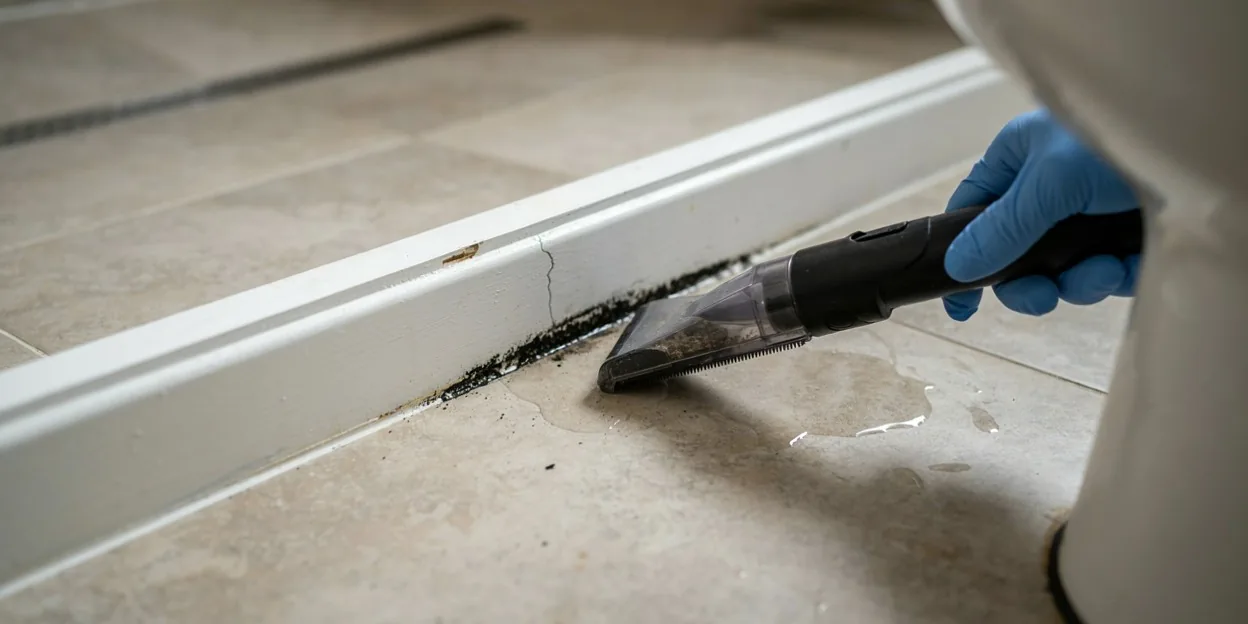
You have painted the master bath ceiling twice, and the gray spots above the shower are back a third time. This week you noticed the drywall beside the vanity feels soft, and the baseboard under it has swollen and pulled away from the wall. Two different problems are feeding the same room. This site connects you by phone with an independent local provider who does bathroom mold removal in North Port and across south Sarasota County.
Steam above, a slow leak below, and a meter that sorts them out
The crew reads the ceiling and the vanity wall separately. Ceiling spots over a shower in a windowless bath usually come from steam with nowhere to go: either there is no exhaust fan, or the fan vents into the attic instead of through the roof, or it runs for two minutes and shuts off. The meter on that ceiling usually reads dry between showers, which confirms a ventilation problem rather than a leak.
The soft wall beside the vanity is different. The meter reads wet all the way to the floor, and the crew pulls the vanity drawers to look at the supply lines and the drain trap. A slow drip from a compression fitting or a cracked trap wets the back of the cabinet and the drywall behind it for months before anyone sees it.
Shut the vanity valves and let the room breathe
Close the two supply valves under the sink and put a towel on the cabinet floor to see whether the trap drips when the sink drains. Run the exhaust fan after every shower for twenty minutes, or open the door and a window if there is no fan. Do not scrub the ceiling. Disturbing growth on drywall throws more into the air than leaving it alone.
Photograph the ceiling spots, the soft wall, and the inside of the vanity cabinet. If the bathroom shares a wall with a bedroom closet, check the closet side too, because a vanity leak often shows up first on the back of the closet wall.
Ceiling drywall, vanity backs, and wet wallboard out; tile and tub stay
Growth on a painted ceiling that reads dry is sometimes cleaned in place; a ceiling that has grown through the paint repeatedly comes out and is replaced. The wet drywall behind the vanity comes out under containment, along with the baseboard and the particleboard back of the cabinet if it has swelled. The vanity box is evaluated rather than assumed lost.
Tile, the tub, and the block behind the drywall are HEPA vacuumed, wiped, and dried. The crew fixes or arranges the fix for the trap or supply line and for the ventilation, which may mean a new fan ducted through the roof. If the growth climbed into the attic above the bath because the fan vented there, attic mold remediation handles the deck. If the shared closet wall is wet too, it becomes mold removal on that side. Mold damage repair puts the wall and ceiling back when everything reads dry.
Windowless master baths and fans that vent into the attic
North Port's 1980s and 1990s block houses often have a master bath in the middle of the floor plan, with no window and a small fan that was ducted into the attic rather than out. Twenty years of steam in a Florida attic grows mold on the fan housing, the top of the ceiling drywall, and the nearby trusses. Newer homes in Wellen Park and the Toledo Blade communities vent correctly but have bigger showers and more steam, and owners who leave the fan off for the summer see the same ceiling spots.
Florida licenses mold assessors and mold remediators separately, and you can look up a remediator on the state's DBPR search. Many policies here cap mold coverage and exclude long-running leaks, so a vanity drip that ran for months may be yours to pay; ask the adjuster before the wall comes down. Replacing drywall and plumbing under a vanity usually needs a permit from the city's Development Services office, which the provider handles.
Calling about the bathroom that never dries
Have the address, whether the bath has a window or a fan, and where the soft spot is. Say whether the ceiling spots come back after painting and whether the shared closet wall smells. Call (941) 420-6510.