HVAC Mold Cleaning in North Port, FL
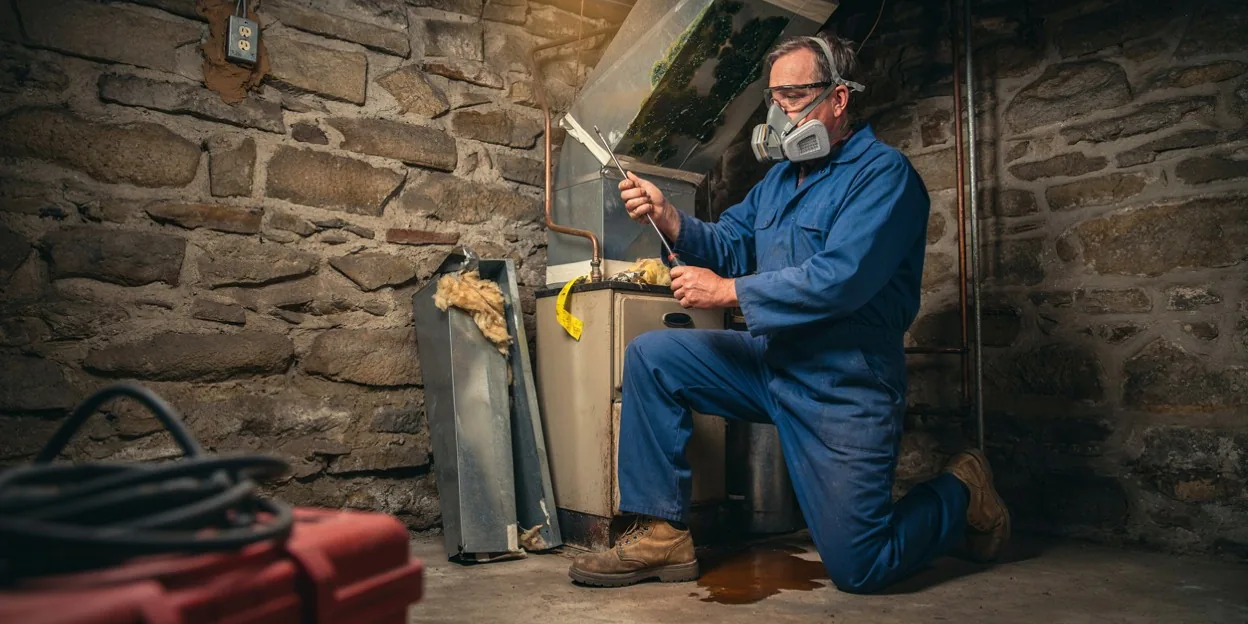
Every time the air conditioning cycles on, a sour, damp smell drifts out of the vents, strongest in the bedroom nearest the hallway closet where the air handler lives. The filter is new. The thermostat says 76. You opened the closet and the floor around the unit is wet and the insulation on the plenum has gray streaks. The system itself is growing it. This site connects you by phone with an independent local provider who does HVAC mold cleaning in North Port and across south Sarasota County.
Finding whether the water is the drain line, the coil, or the attic
The crew starts at the air handler. They pull the access panel and look at the evaporator coil, the drain pan, and the condensate line. In North Port closets on a slab, the usual story is a drain line that clogged with algae, backed up, and let the pan overflow onto the closet floor for weeks. The second story is a coil too dirty to drain, or a unit so oversized that it cools the air in minutes and shuts off before it pulls any humidity out.
If the handler sits in the attic instead, the crew checks the flex duct. A hot attic in August can run above 130 degrees, and cold air moving through poorly sealed flex duct sweats on the outside of the insulation jacket, dripping onto the ceiling drywall below. That shows up as a ring on a bedroom ceiling rather than a smell at the vents.
Set the fan to auto and clear the drain before you call
Turn the thermostat fan from on to auto, so the blower runs only when the system is cooling. If you can see the condensate line outside, check whether water drips from it while the unit runs. If nothing comes out, the line is likely clogged, and the pan is where the water is going.
Do not spray anything into the vents or the return. Aerosol products wet the duct liner and make the problem worse. Write down which rooms smell strongest and whether the smell changes when the system shuts off. That pattern tells the crew whether the ducts or the handler are the source.
Coil and pan cleaned, duct liner and wet insulation out
The crew cleans the evaporator coil, the blower, and the drain pan, then clears or replaces the condensate line. Any wet insulation on the plenum or in the closet walls comes out and is bagged. The closet drywall is metered, and if it reads wet it is treated as mold removal with its own containment.
Metal duct is cleaned. Flex duct with growth on the inner liner is replaced rather than cleaned, because the liner cannot be scrubbed. Once the equipment is clean, the crew runs air scrubbers while the system operates, and a dehumidifier if the house reads above 60 percent inside. The fix for the cause is part of the job: a float switch on the pan, a cleared line, a resized unit, or sealed and insulated ducts in the attic. If the closet floor stayed wet long enough to swell the baseboard and door jamb, mold damage repair follows.
Oversized systems, closet handlers, and houses that sat empty
Many North Port houses were built with the air handler in a hallway or laundry closet rather than a conditioned mechanical room, and the condensate line runs to a floor drain or outside through the slab edge. When the line clogs, nobody sees the pan overflow until the closet smells. Seasonal homes make it worse. A house set to 82 degrees for the summer runs the system so little that the air inside never dries, and the first thing the owner notices in November is the smell at the vents.
The weeks without power after Hurricane Ian in 2022 added a round of these calls, because coils and pans that sat wet in a hot closet grew while the system was off. Florida licenses mold remediators separately from assessors, and you can look up the provider on the DBPR search. Replacing an air handler or ductwork, as opposed to cleaning it, usually requires a mechanical permit through the city's Development Services office, and the provider pulls it when the job goes that way.
Calling about the smell at the vents
Have the address, where the air handler sits, and which rooms smell strongest. Say whether water drips from the condensate line outside and how old the system is. Call (941) 420-6510.