Mold Removal in Rotonda West, FL
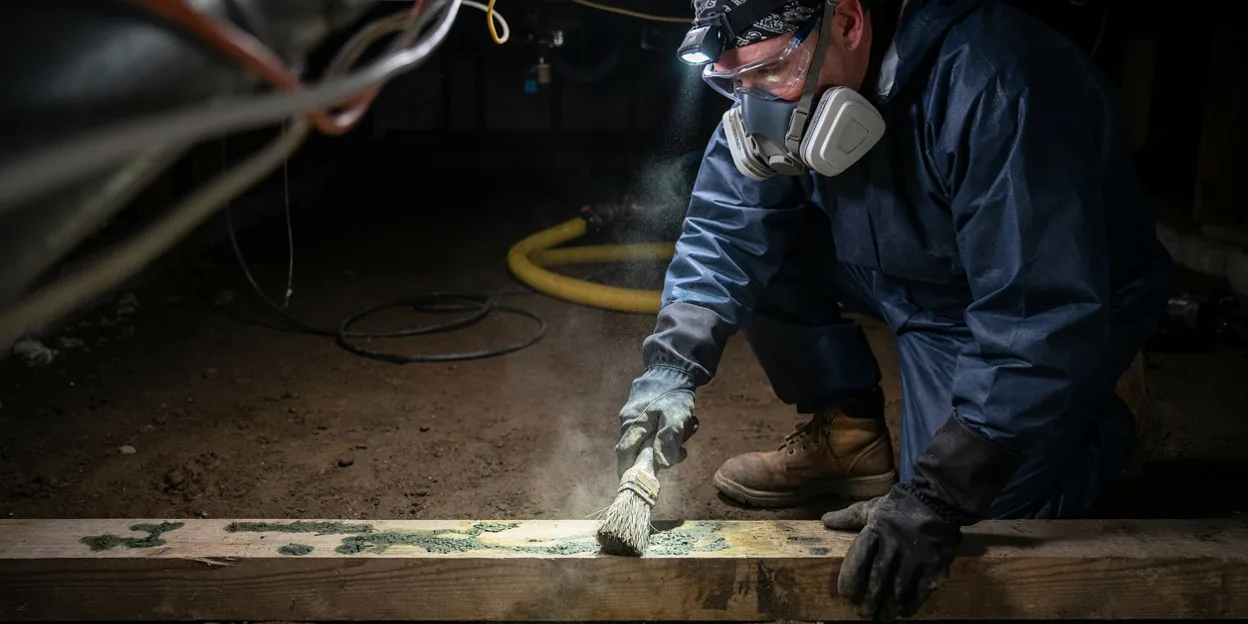
Rotonda West is the circular deed-restricted community in the Cape Haze area of Charlotte County, laid out in the late 1960s as a wheel of seven neighborhoods around a central hub, with 26 miles of canals plus ponds and lakes threaded through it. Most of its houses are block on slab from the 1980s through the 2000s, with a second wave built in recent years on the thousands of lots that sat empty for decades.
The canals are the moisture story. Lots back onto water, the ground sits low, and a heavy wet season or a storm surge up from Lemon Bay and the Gulf puts water against the back of the house. Ian's eye passed close by on September 28, 2022, and Milton's surge in October 2024 ran six to nine feet along this stretch of coast.
Rotonda West homeowners who call us reach an independent mold provider who works west Charlotte County. That provider meters the walls and sets the scope from the readings.
What Rotonda West owners ask for
Water under lanai sliders and garage doors leads to mold removal along the bottom course of block. Houses that lost shingles in Ian and waited months for a roofer are attic mold remediation calls. When drywall and cabinets come out after a storm, mold damage repair rebuilds them once the block is dry.
Deed restrictions, canal maintenance, and the park down the road
The Rotonda West Association enforces the deed restrictions and keeps the canals and common grounds, so exterior repairs after mold work, from a new roof to a changed lanai door, go through its review. Permits for the rebuild come from Charlotte County. A few miles north, Lemon Bay Park in Englewood protects 210 acres and nearly two miles of shoreline on the same bay whose surge reaches Rotonda's canals in a storm.
Call (941) 420-6510 now and tell us which section of the wheel you are in and what got wet. We put you through to a mold provider who works Rotonda West.
Services Available in Rotonda West
Mold Removal
Containment, negative air, and removal of wet drywall, trim, and insulation from a North Port block house, then cleaning and drying of what stays.
Black Mold Removal
Dark growth handled under full containment and protective gear. Color does not name the species, and the steps do not change.
Whole-Home Mold Remediation
Room-by-room containment and removal after storm water, weeks without power, or a house closed up through a wet summer.
HVAC Mold Cleaning
Air handler, coil, drain pan, and duct cleaning when the musty smell arrives every time the air conditioning cycles on.
Bathroom Mold Removal
Growth on ceilings, in grout, behind vanities, and inside wet drywall from steam and slow leaks, the most common first call.
Attic Mold Remediation
Roof-deck and truss mold from lifted shingles, blocked soffits, and flex duct sweating in a hot North Port attic.
Mold Odor Removal
Tracing a musty smell to the wet material behind it, removing that material, and clearing the air instead of masking it.
Mold Damage Repair
Drywall, baseboard, insulation, and cabinet bottoms rebuilt after removal, with the water source fixed before anything closes up.